Before Google, There Was a Book on Your Doorstep: What the White Pages Actually Got Right
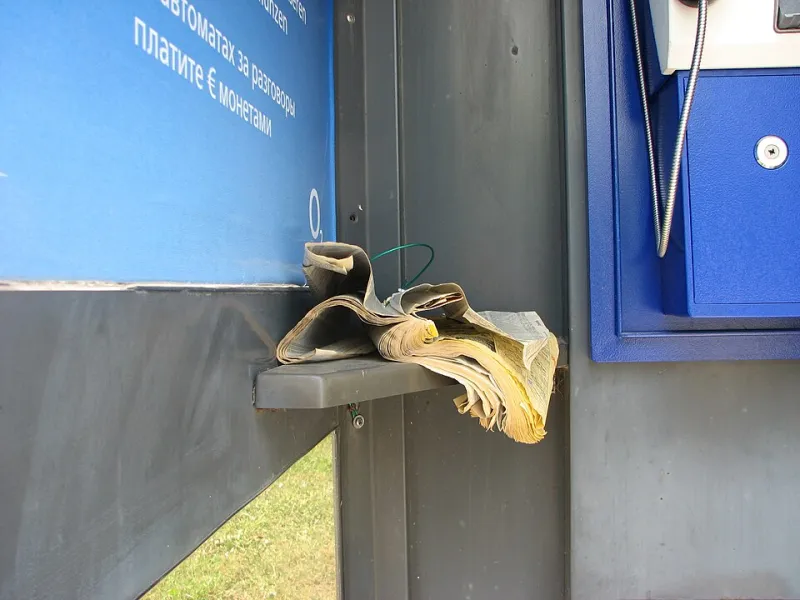
Photo: HTO, Public domain, via Wikimedia Commons
Somewhere in a thrift store bin right now, there's a 2003 White Pages for a mid-sized American city. It costs four dollars. Twenty years ago, it was delivered to every household in that city, free, whether they wanted it or not.
That book represented something we haven't rebuilt since: a single, universal, publicly accessible index of who lived where and how to reach them. You didn't need to know someone's email. You didn't need to be Facebook friends. You needed a last name and a rough idea of the city.
We killed it, mostly on purpose. And finding people got worse.
The Directory Was a Public Utility, Not a Product
It's worth remembering why the phone book worked so well. Telephone service was regulated, and in exchange for monopoly pricing, telcos were required to publish directories. Every listed subscriber, alphabetical, updated annually. If you had a landline and hadn't paid extra for an unlisted number, you were in there.
That meant coverage was near-total for its era. A 1990 directory covered maybe 90% of households in its service area. Compare that to today, where any given people-search database might have current info on a fraction of adults — and where the fraction varies wildly depending on who's selling the data and when they bought it.
The phone book also had something modern search lacks: a single source of truth. There was no question of which directory was right. There was one.
The Switch to Digital Didn't Consolidate — It Fractured
Here's the part most people get wrong. When the White Pages went digital, the data didn't move into one big database. It shattered.
Today, directory-style information lives in dozens of disconnected places:
- State and county records — voter registration files (public in most states), property deeds, professional licenses
- Telco and utility data — increasingly locked down, sold in bulk to aggregators rather than published
- Commercial data brokers — companies that buy mailing lists, warranty registrations, and sweepstakes entries, then resell matches
- Social platforms — technically searchable, practically walled off behind logins and privacy settings
- Legacy directory remnants — old CD-ROM databases and digitized phone books that stopped updating years ago
No single player sees all of it. That's why searching the same name on three different people-search sites gets you three different people. Each one is holding a different piece of the puzzle and presenting it as the whole picture.
The Voluntary Vanishing
There's a second force at work: people actively opting out.
In the phone book era, going unlisted was a deliberate, paid choice — maybe 5% of households. Today, being hard to find is the default for anyone under 40. No landline means no traditional directory listing. A prepaid phone leaves no paper trail. Many people have no published address at all if they rent, move often, or use a PO box.
We spoke with several people who are essentially invisible in modern directories. A 34-year-old nurse in Ohio told us she's never appeared on a people-search site she knows of — no property, no voter registration lapse, minimal social media. A retired machinist in Oregon keeps a landline specifically so he exists somewhere official. "My grandkids can't find me online," he said. "But the county knows where I live, because I pay taxes."
That's the irony: the most findable Americans are now the ones with the deepest paper trails — property, licenses, court records. The least findable are the renting, the mobile, the deliberately private. The directory used to flatten everyone. Now it sorts them.
Where the Data Actually Lives Now
If you're trying to find someone today, here's the honest map:
- Government records are the backbone. Voter rolls, property assessors, court dockets, corporate filings. Free, public, but scattered across thousands of county websites with inconsistent formats.
- Aggregators buy and merge the above into searchable databases — the modern replacement for the White Pages, except there are dozens of them and none is complete.
- Telco-adjacent data — reverse phone lookups draw on records that used to feed the printed book, now sold through licensing deals rather than published openly.
The gap between these layers is where searches fail. A person might be findable in county property records but absent from every commercial database, or vice versa.
What a Modern Directory Should Do
The White Pages solved a hard problem with a simple answer: aggregate everything, publish it, update it annually. We've spent twenty years failing to replicate that, not because the data disappeared, but because it fragmented faster than anyone could reassemble it.
That's the problem we're building ScatPoisk against. The thesis is straightforward: instead of one more database, you need one more search — something that queries across the scattered sources the way the phone book's alphabetical index once did, and shows you which records are actually current.
The phone book didn't survive. The problem it solved never went away. It just got harder — and nobody's job is to make it easy again. That's the whole pitch.