Someone Called 911 From Your Address. You Can Read Every Word of It.
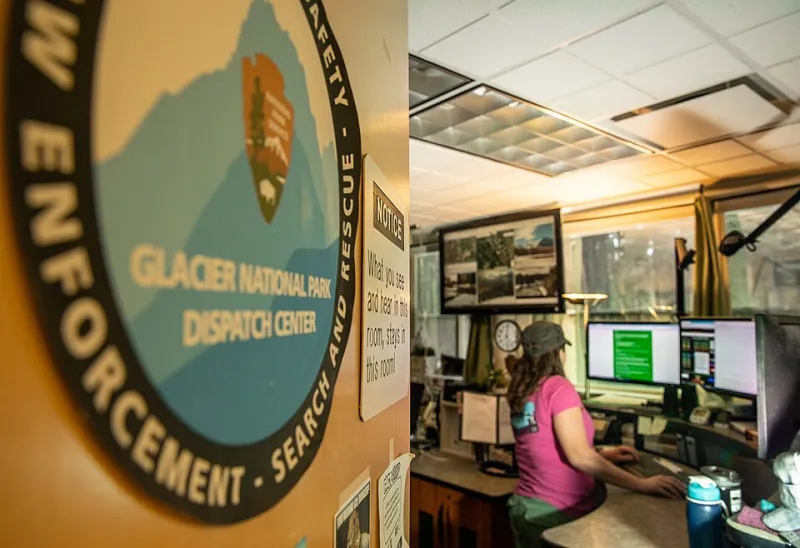
Photo: GlacierNPS, Public domain, via Wikimedia Commons
Here's a fun fact most people never think about: there's probably a government document that lists every time an emergency call was made from your address, complete with timestamps, dispatcher notes, and possibly the caller's exact words. It's called a CAD log — computer-aided dispatch — and it sits in a server at your local emergency communications center right now.
You can request it. In most states, you can request the audio too. Almost nobody does, mostly because almost nobody knows these records exist in a form you can ask for.
At ScatPoisk, we're basically obsessed with the gap between "data that exists about you" and "data you can actually get your hands on." Dispatch records sit right in the middle of that gap. So let's walk through how to close it.
What You're Actually Asking For
When someone dials 911, a few separate records get created:
- The CAD log — a running, timestamped account of the call. Times, locations, dispatcher annotations, units assigned, how long each response took.
- The audio recording — the 911 call itself, and often the radio traffic between dispatch and responders.
- Call detail data — phone number the call came from, duration, which tower or trunk it hit.
The CAD log is the sleeper hit. It's structured, it's searchable, and it doesn't require anyone to listen to a recording. If you're trying to reconstruct a timeline — for an insurance dispute, a landlord-tenant fight, a restraining order case, or just because your memory of a bad night is fuzzy — this is usually the most useful document.
Step One: Figure Out Who Holds the Records
There's no national 911 records office. The records live with whoever ran the dispatch center, which varies wildly by jurisdiction:
- Big cities: usually the police department or a consolidated 911/emergency communications center (think combined dispatch centers in most metro areas).
- Suburbs and smaller counties: often the sheriff's office or a regional emergency communications district.
- Some states: a county-level agency you've never heard of, like a "public safety answering point" (PSAP — yes, that's the real term).
Not sure who took your call? If you know the date and roughly the time, call the non-emergency line for your local police or sheriff and just ask: "Which agency handles 911 dispatch for my address?" They get this question more than you'd think.
Step Two: Make the Request (It's Easier Than It Sounds)
Nearly every state has a public records law — the Freedom of Information Act at the federal level, and things like the California Public Records Act, Texas Public Information Act, Florida's famously broad "Sunshine Law," and so on at the state level. Dispatch records are government records under all of them.
Your request should include:
- The date and approximate time of the call (a 20-minute window is plenty).
- The address or location the call came from.
- A clear description: "I am requesting the CAD incident log and 911 audio recording for a call originating from [address] on [date], between approximately [time] and [time]."
- Proof you're involved — more on this below.
Many agencies have an online records request portal. Others still want an email or a form mailed to a records custodian. A few holdouts genuinely do want a fax. (We've written about those county offices before. They're still out there.)
Step Three: Expect the Privacy Speed Bump
Here's the part where most requests get complicated: 911 audio often contains other people's information — the caller's voice, sometimes victims' statements, sometimes medical details.
Different states handle this differently:
- Some states treat 911 audio as public by default (Florida, for example, is famously liberal with it).
- Others, like New York and Pennsylvania, restrict 911 recordings heavily — New York law actually bars releasing 911 audio except in limited circumstances.
- Many states split the difference: the CAD log is public, but the audio requires you to show you're a party to the call or get a court order.
The workaround, if you were the caller or the subject of the call: say so explicitly, and attach ID or documentation. Records custodians are far more cooperative when you demonstrate you're requesting your own records rather than snooping on a neighbor.
The Fees and the Wait
Budget expectations:
- Fees: anywhere from free to $10–$50, sometimes more if an engineer has to pull audio from an archival system. Some agencies waive fees for small requests; some charge by the hour of staff time.
- Wait times: statutorily, most states require a response within 5–10 business days. Realistically, audio requests can take 4–8 weeks, especially if the recording has been archived to long-term storage.
- Retention limits: this is the one that bites people. Many agencies only keep detailed CAD data and audio for 90 days to 2 years before deletion. If your call was in 2019, there's a real chance it's gone. Ask anyway — retention policies vary even between neighboring counties — but ask soon for anything recent.
Why Bother?
Fair question. People request their own dispatch records for reasons that tend to be surprisingly high-stakes:
- Disputing an insurance claim about what happened and when
- Documenting a pattern of calls for a protective order or a housing case
- Verifying response times after a complaint about slow emergency service
- Simply confirming what a call actually said, because memory under stress is a terrible recorder
That last one might matter most. In a crisis, you don't take notes. The government does — it just doesn't advertise that you can read them.
The whole philosophy behind this site is that the records exist whether or not you know how to ask. Dispatch logs are some of the most granular documents any government keeps about ordinary people. For once, the person in the file can be the one pulling the file.