I Emailed Five of America's Least Digital County Offices. Here's Who Actually Wrote Back.
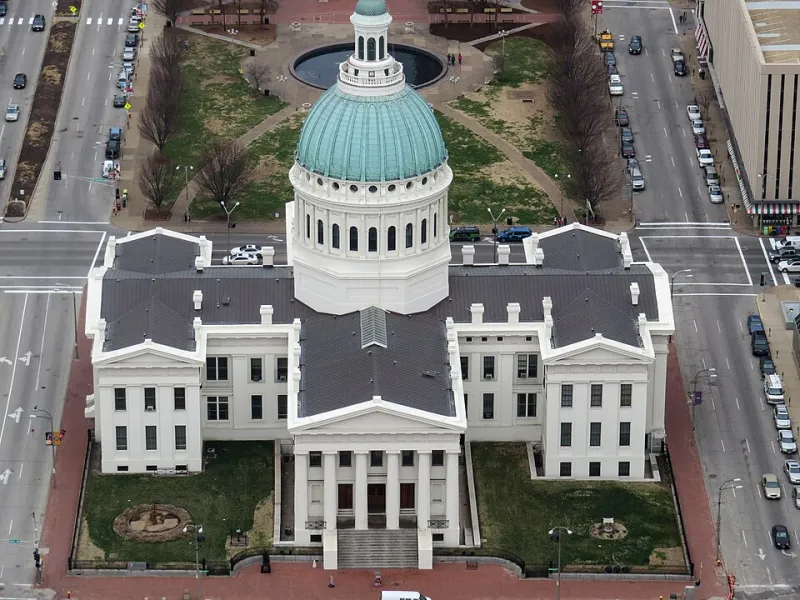
Photo: Lee Ann Ratledge, CC BY 4.0, via Wikimedia Commons
The Experiment
I picked five counties with a simple filter: the kind of places where the official records page is a single paragraph and a phone number. No online portal. No search box. Just a courthouse, a filing cabinet, and — in at least one case, I'm convinced — a fax machine last serviced in 1998.
My ask was identical to each office: a copy of a property deed and a marriage license from roughly twenty years ago. Small requests. The kind a title company knocks out in minutes with a subscription database.
Then I waited.
How the Requests Went
The phone-first county (rural Georgia). No email listed at all. I called on a Tuesday morning; a clerk picked up on the second ring, asked for the names and approximate year, and said, "Give me a day or two." She mailed photocopies with an invoice for $1.25. Total turnaround: six days. The catch? She searched a handwritten index book — the same one since the 1970s — and told me plainly that if the spelling was off, she'd have found nothing.
The mail-only office (rural Kansas). Everything requires a stamped envelope. I mailed a request, got a postcard back confirming receipt, then received copies twelve days later. Cost: 50 cents a page plus postage. Old school, but the copies were certified, stamped, and notarized — cleaner than what most online vendors resell for $19.99.
The fax machine holdout (Appalachian Kentucky). Yes, a fax. I sent the request, got a busy signal twice, then a one-line confirmation: "Received. 3-5 wks." It arrived in four weeks, slightly crooked, perfectly legible.
The in-person-or-nothing recorder (western Texas). Records exist only on microfilm in the basement. A volunteer will pull them if you call ahead. I didn't make the drive; a local title researcher did it for me in a week for $40. She described the process as "flipping through a film reader until your neck hurts."
The surprisingly fast one (rural New England). I expected the slowest response here and got the fastest — a scanned PDF in 48 hours, because one deputy clerk had quietly digitized twenty years of indexes on her own initiative. The county's website still doesn't mention it.
The Scoreboard
| County | Method | Time | Cost |
|---|---|---|---|
| Georgia | Phone + mail | 6 days | $1.25 |
| Kansas | 12 days | ~$4 | |
| Kentucky | Fax | 4 weeks | $5 |
| Texas | In person / proxy | 7 days | $40 |
| New England | 2 days | Free |
Compare that to the commercial background-check sites that charge $30 for records you can get from a courthouse for pocket change. The offline route isn't just cheaper — it's often more accurate, because a clerk who physically handles the index catches errors an algorithm skims past.
What We're Losing
Here's the uncomfortable part. Every one of these requests required a skill the modern internet has atrophied: knowing who to contact, how to phrase a request, and when to pick up a phone instead of a search bar.
That's the act of poisk — real searching, not querying. A database gives you what matches your keywords. Carol in Georgia gives you the record, plus a warning that the groom's name was misspelled on the license, plus a story about the couple. The noise is the signal.
Digital archives are a genuine public good, and I'm not romanticizing microfilm neck pain. But as more offices digitize, the assumption creeps in that anything not online doesn't exist. It does. It's in a basement in Texas, waiting for someone willing to call first.