Three 'Impossible' Lookups, Three Librarians, One Free Card: The Research Muscle Google Never Had

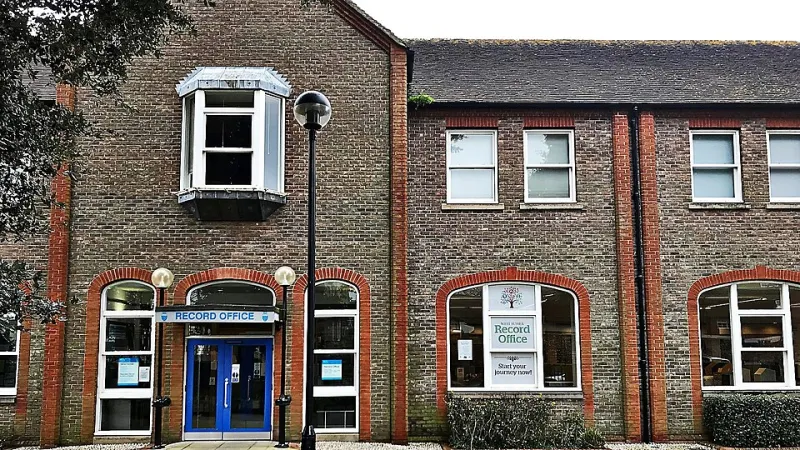
Photo: IPPA photographer, CC BY 4.0, via Wikimedia Commons
Google is a genius at answering questions nobody asked before 2010. Ask it anything newer than a smartphone and it's terrifyingly good. Ask it about a man who died in Dayton, Ohio in 1948, and it shrugs.
That's where the most underpriced subscription in America comes in: the public library card. It costs nothing, it never rate-limits you, and behind it sits a stack of commercial databases — Newspapers.com, LexisNexis, Ancestry Library Edition, ProQuest, HeritageQuest — that would run a private researcher well into five figures annually. We decided to test just how far that card actually goes by bringing three deliberately nasty lookup requests to librarians in three different states.
Test One: The Obituary That Wasn't Online
The request: find the death notice for a fictional great-grandfather, last known alive in Dayton, Ohio, late 1940s. No exact date. No exact name spelling.
A Google search returns the usual genealogy-site paywall maze. The Dayton Metro Library, by contrast, has a local history room staffed by people who do this all day. Within two business days of an email, a reference librarian had pulled the microfilm window, scanned the death notice from the Journal Herald, and attached a second hit — a mention in a union newsletter we hadn't thought to look for.
The trick isn't magic. It's that librarians search newspapers.com and ProQuest historical newspapers by date range and keyword variants, not by exact name. Google's index mostly skips scanned microfilm. Theirs doesn't.
Test Two: The House That Changed Hands Seven Times
Next, we asked a library in Wake County, North Carolina, to help trace ownership of a 1920s bungalow. The county register of deeds will sell you deeds one at a time; the reference desk will show you how to chain them for free.
The librarian pulled Sanborn fire insurance maps, city directories going back a century, and the county's online deed index, then walked us through connecting grantor to grantee across seven transfers. Total cost: zero. Total time: about 90 minutes, most of it her doing the work while we watched.
City directories are the sleeper weapon here. Before the internet, they listed every household, occupation, and often a spouse's name, year by year. They're indexed in ways Google can't touch, and many library systems have digitized their full runs.
Test Three: The Phone Book Problem
Our last request was deliberately cruel: find a person's listing in Cleveland circa 1975, given only a name and a rough neighborhood.
The Cuyahoga County Public Library keeps reverse directories — lookup by address, not by name — for greater Cleveland, some decades on microfilm only. No search engine has ever touched this material. The librarian found the street, the cross-reference entry, and the likely household in under an hour, then suggested a neighboring suburb's directory because the boundary lines had changed in 1968. We did not know boundary lines had changed in 1968. She did.
What This Means for Your Own Lookups
A few patterns worth stealing from the experiment:
- Email the reference desk before you visit. Most systems answer written research questions for free, often with a time cap (usually 30–60 minutes of staff time). Some states, like Ohio, have statewide networks that route your question to whichever branch holds the material.
- Name the database in your request. Asking "can you check Newspapers.com for this name between 1945 and 1950?" gets better results than "can you help me find my ancestor?"
- Ask what they'd try next. The most valuable thing a librarian gives you isn't the answer — it's the second source you didn't know existed.
- State libraries often license more than your local branch. If your town's system is small, your state library's remote-access portal may carry the heavy databases anyway.
The Last Unlimited Plan
There's an irony in all this. We spend our time on ScatPoisk covering commercial people-search and records services — and plenty of them are worth paying for. But the quiet truth is that the deepest, oldest, hardest-to-index records in America are held by institutions whose business model is giving them away, staffed by professionals whose entire job is finding things search engines can't.
The card in your wallet that gets you into the gym is not the most powerful card you own. The one with the barcode on it is.
Bring your librarian an impossible question. They've seen worse, and they'll probably win.